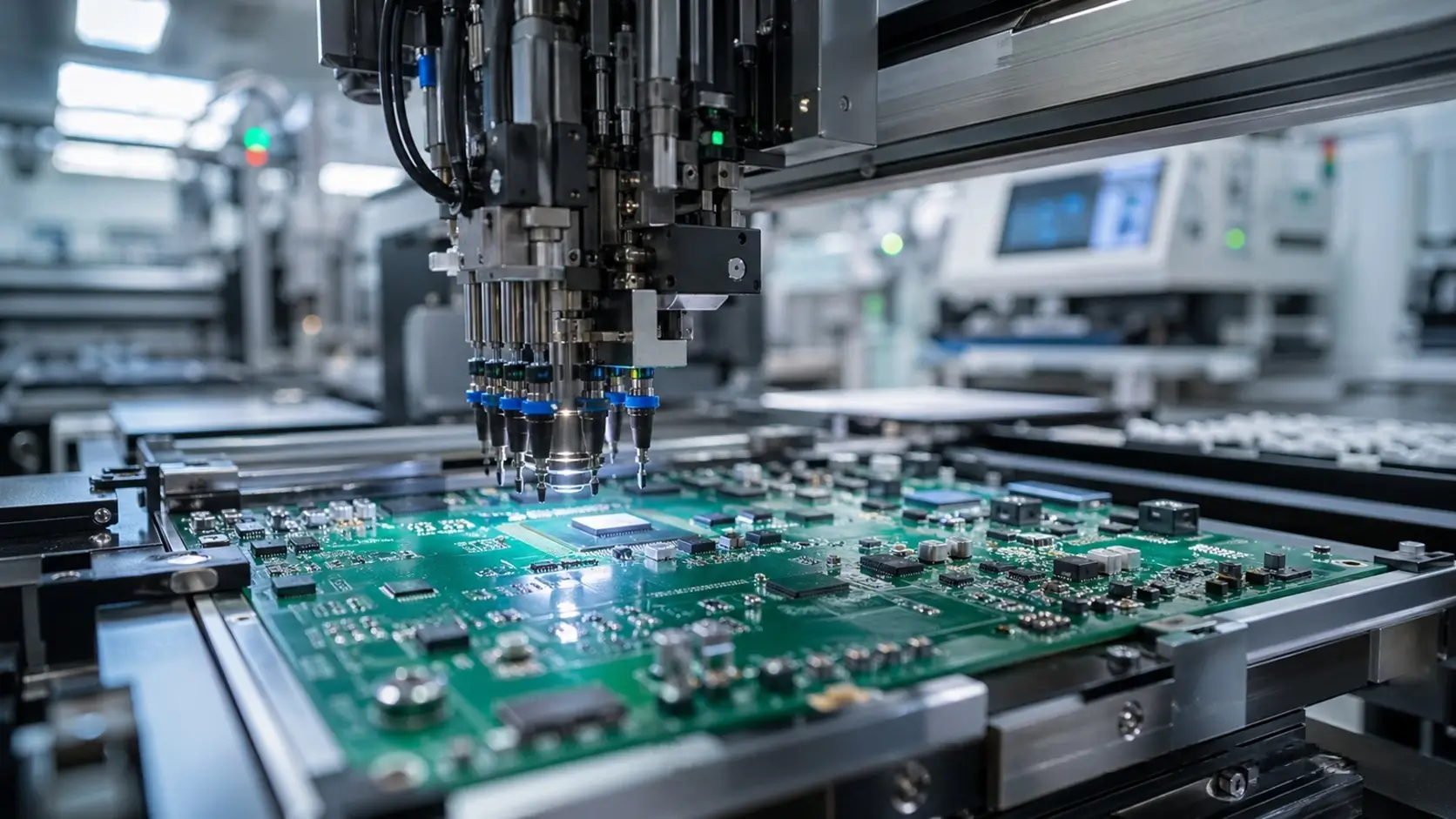
If you look at the back of a smartphone, you may have seen a statement such as “Designed by Apple in California, Assembled in China.”
Behind this simple sentence is a vast and highly integrated electronics manufacturing ecosystem.
If you follow the electronics industry or manufacturing news, you have probably come across four common abbreviations: OEM, ODM, EMS and PCBA. These terms are often used together, but they actually describe different aspects of electronics manufacturing.
So, what do OEM, ODM, EMS and PCBA really mean? And how are they related?
Let’s break them down.
1. OEM: Manufacturing to the Customer’s Specifications
OEM stands for Original Equipment Manufacturer.
In electronics manufacturing, OEM is commonly associated with a manufacturing model in which a manufacturer produces products according to the customer’s designs, specifications and requirements.
The basic concept is simple:
The customer provides the product design and specifications; the manufacturer handles production.
The manufacturer follows the customer’s drawings, process requirements, quality standards and production instructions to manufacture the finished product under the customer’s brand.
A classic example: Apple and Foxconn
The iPhone is designed by Apple, including its industrial design, hardware architecture, software and detailed manufacturing requirements. Foxconn manufactures and assembles the products according to Apple’s specifications and production requirements.
This is a typical example of an OEM manufacturing relationship.
The key characteristic of OEM manufacturing can be summarized as:
“You provide the design; we provide the manufacturing.”
For the manufacturer, production efficiency, process control, quality management and delivery are critical. The manufacturer typically earns revenue from manufacturing services rather than from owning the consumer-facing product brand.
2. ODM: From Manufacturing to Product Design
ODM stands for Original Design Manufacturer.
Unlike a traditional OEM model, an ODM manufacturer can participate in product development and design in addition to manufacturing.
Instead of waiting for a customer to provide a complete product design, an ODM company may develop its own product platform, engineering solution or complete product design and then offer it to brand owners.
For example, an ODM company may independently develop a power bank, smart home device or consumer electronics product. A brand customer can then adopt the existing design, make modifications according to its requirements, and sell the finished product under its own brand.
This model is particularly common in industries such as:
- Consumer electronics
- Smartphones
- Home appliances
- Smart home products
- Computer hardware
- IoT devices
The fundamental difference can be summarized as:
OEM: “You design, we manufacture.”
ODM: “We design and manufacture, you brand and sell.”
Because ODM manufacturers contribute more engineering and product development capabilities, their role in the product value chain is generally broader than that of a pure contract manufacturer.
3. EMS: Electronics Manufacturing Services Across the Supply Chain
EMS stands for Electronic Manufacturing Services.
EMS is slightly different from OEM and ODM because it primarily describes a manufacturing service capability and business model, rather than simply who owns the product design.
A capable EMS provider can support customers across multiple stages of the electronics manufacturing process.
Depending on the company and its capabilities, EMS services may include:
Component and Material Procurement
EMS providers can source electronic components, PCBs, mechanical parts and other production materials from qualified suppliers and manage the associated supply chain.
PCB Assembly
This can include SMT placement, through-hole assembly, soldering, inspection and other PCB assembly processes.
Testing and Quality Control
EMS providers may perform electrical testing, functional testing, AOI, SPI, X-ray inspection and other quality-control processes depending on the product requirements.
Final Assembly and Packaging
Some EMS companies also provide system assembly, labeling, packaging and logistics services.
Repair and After-Sales Support
Depending on the contract, EMS providers may provide repair, rework, failure analysis and other after-sales manufacturing services.
In simple terms:
OEM focuses on manufacturing according to customer requirements.
ODM combines product design and manufacturing.
EMS focuses on providing integrated electronics manufacturing services across multiple stages of the supply chain.
An EMS provider can therefore act as a manufacturing partner rather than simply a production subcontractor.
4. PCBA: A Product, Not a Business Model
Unlike OEM, ODM and EMS, PCBA is not a business model or manufacturing relationship.
PCBA stands for Printed Circuit Board Assembly.
A PCBA is a PCB populated with electronic components through assembly processes such as SMT and through-hole technology.
A simplified formula is:
PCB + Electronic Components + Assembly Processes = PCBA
If you open almost any modern electronic product, you will find one or more PCBAs inside. They may contain integrated circuits, resistors, capacitors, connectors, sensors and other electronic components.
PCBA manufacturing typically involves multiple processes, including:
- Solder paste printing
- Solder paste inspection (SPI)
- SMT component placement
- Reflow soldering
- AOI inspection
- Through-hole assembly
- Electrical and functional testing
- Cleaning and drying
- Final assembly
For many EMS companies, PCBA manufacturing is one of the core production capabilities.
As electronics products become smaller and more complex, PCBA manufacturing also requires increasingly sophisticated equipment, process control and inspection technologies.
5. How Are OEM, ODM, EMS and PCBA Related?
One of the easiest ways to understand these four terms is to look at what each one describes.
| Term | What It Describes | Main Role |
|---|---|---|
| OEM | Manufacturing model | Manufactures products according to customer designs and specifications |
| ODM | Design + manufacturing model | Develops, designs and manufactures products for brand customers |
| EMS | Manufacturing service capability | Provides integrated electronics manufacturing and supply-chain services |
| PCBA | Physical product / assembly | A PCB populated with electronic components |
In other words:
OEM, ODM and EMS describe business or manufacturing relationships.
PCBA describes the physical electronic assembly being manufactured.
These concepts can therefore overlap.
For example, an EMS company may manufacture PCBAs for an OEM customer. An ODM company may design and manufacture a complete electronic product that contains multiple PCBAs. An OEM may outsource PCBA production to an EMS provider.
6. From Contract Manufacturing to Integrated Manufacturing Services
The development of the electronics manufacturing industry has gradually moved from simple assembly toward more integrated manufacturing capabilities.
In the early stages of electronics manufacturing, many manufacturers focused primarily on OEM production, where the customer provided the product design and the factory focused on manufacturing.
As manufacturers developed stronger engineering, supply-chain and production capabilities, some expanded into ODM and EMS services.
Today, leading electronics manufacturers may provide a much broader range of capabilities, including:
- Product engineering
- Design and development
- Component sourcing
- PCB assembly
- System assembly
- Testing and inspection
- Supply-chain management
- Manufacturing process optimization
- Logistics
- Repair and after-sales services
This evolution reflects the increasing complexity of modern electronics manufacturing.
Whether it is a smartphone, automotive electronic module, industrial controller, communication device or AI server, the final product often depends on a highly integrated manufacturing process in which the PCBA is one of the fundamental building blocks.
7. Why PCBA Manufacturing and Cleaning Matter
As electronic assemblies become more compact and complex, manufacturing quality becomes increasingly important.
After soldering and reflow, residues such as flux residues, solder particles and other process contaminants may remain on the PCBA surface.
Depending on the application and cleanliness requirements, these residues can affect:
- Electrical reliability
- Insulation resistance
- Corrosion resistance
- Bonding and coating performance
- Long-term product reliability
- Subsequent assembly processes
For this reason, PCBA cleaning can be an important part of the electronics manufacturing process, particularly for applications with demanding reliability and cleanliness requirements.
Cleaning processes may include aqueous cleaning, chemical washing, DI-water rinsing, spray cleaning, ultrasonic cleaning and other process-specific technologies.
For high-volume EMS and electronics manufacturing operations, the selection of the appropriate cleaning equipment depends on factors such as:
- PCB size and design
- Component density
- Flux type
- Standoff height
- Production volume
- Required cleanliness level
- Water and chemical consumption
- Wastewater management requirements
- Inline or batch production requirements
As electronics manufacturing continues to evolve, cleaning technology is also becoming an increasingly important part of the overall production process.
Conclusion
OEM, ODM, EMS and PCBA are four frequently used terms in the electronics manufacturing industry, but they describe different things.
OEM focuses on manufacturing according to customer requirements.
ODM combines product design and manufacturing.
EMS provides integrated electronics manufacturing services across multiple stages of the supply chain.
PCBA is the physical electronic assembly produced through PCB assembly processes.
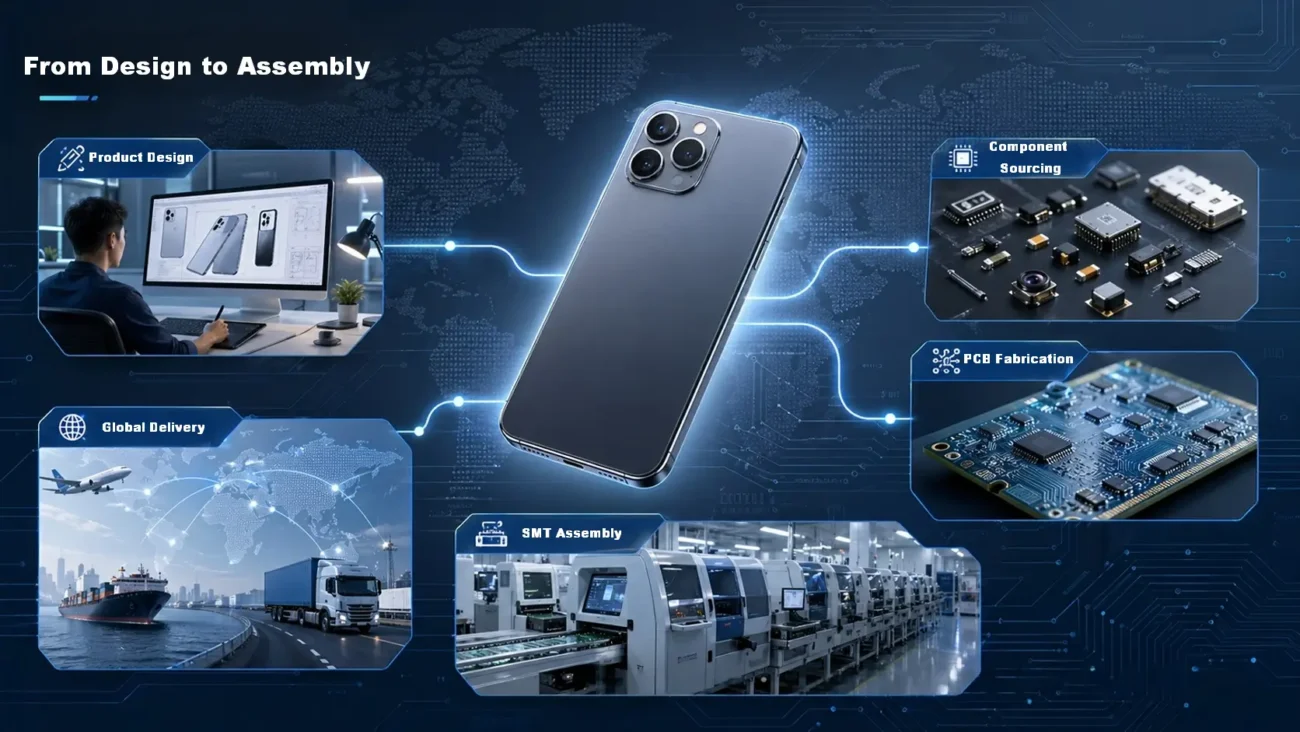
Understanding these differences makes it easier to understand how products move from design and component sourcing to PCB assembly, testing, cleaning, final assembly and delivery.
For electronics manufacturers, EMS providers and OEM/ODM companies, each stage of this manufacturing chain can have a direct impact on product quality, production efficiency and long-term reliability.