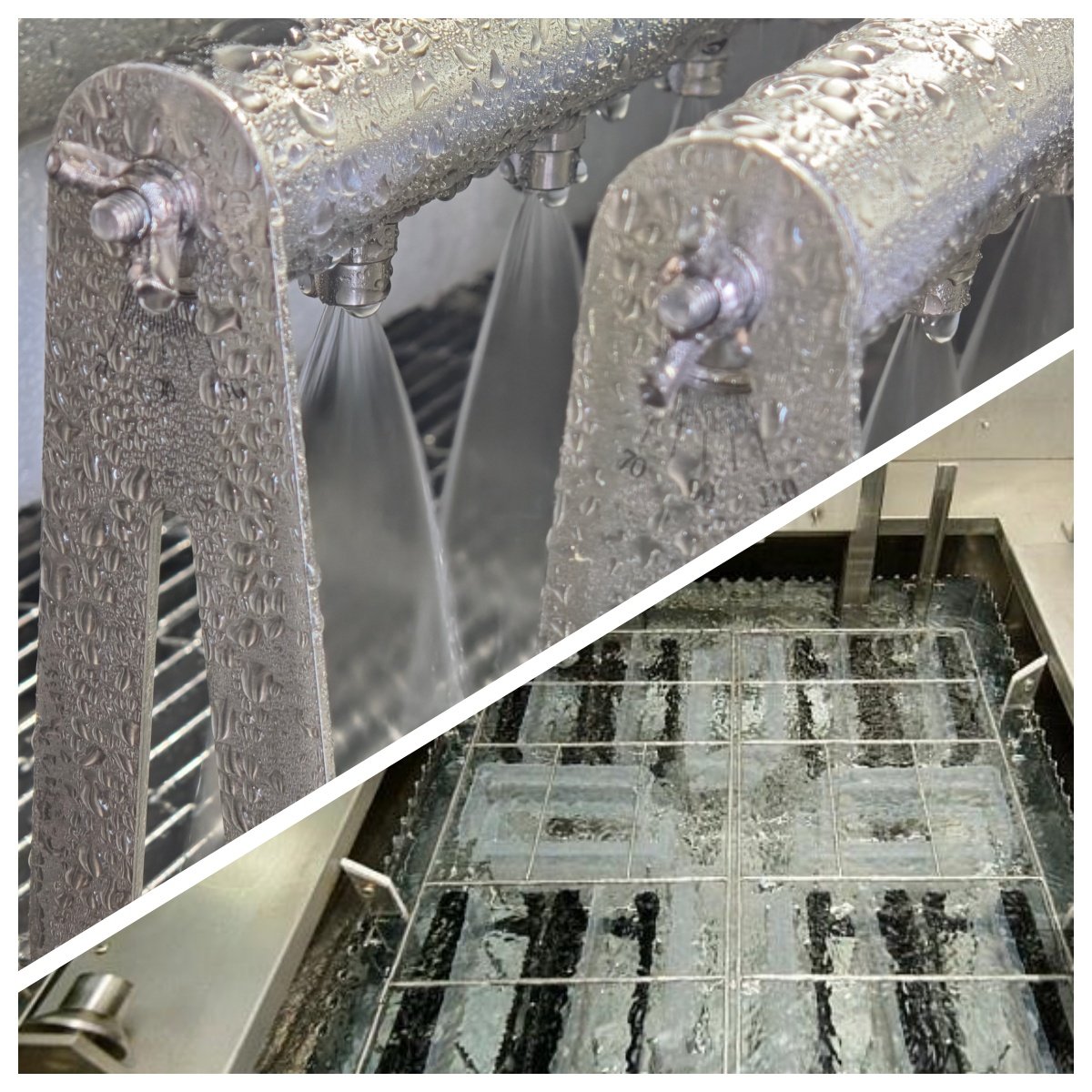
Choosing a cleaning process for optical transceiver PCBA assemblies requires more than comparing cleaning speed. Component geometry, flux chemistry, solder joint design, material compatibility, and cleanliness requirements all affect process selection.
Spray Cleaning
Spray cleaning uses directed liquid flow to deliver cleaning chemistry to assembly surfaces. It can be configured for inline production and may be suitable for applications requiring controlled washing, rinsing, and drying.
Its effectiveness beneath low-standoff components depends on spray access, liquid flow, chemistry, and the ability to remove loosened residues.
Ultrasonic Cleaning
Ultrasonic cleaning uses acoustic energy to assist contaminant removal. Its suitability depends on component construction, assembly design, operating conditions, and the manufacturer’s process restrictions.
Some assemblies may be sensitive to ultrasonic exposure. Potential effects on solder joints and delicate components should be assessed rather than assumed.
How Should Manufacturers Choose?
The preferred process should be established through representative sample testing, with attention to flux removal, component integrity, rinsing, drying, and repeatability.
For high-volume production, manufacturers should also consider equipment integration, throughput, water consumption, and wastewater management.
ACTSPRAY can help manufacturers evaluate spray-based PCBA cleaning configurations against their specific assembly and production requirements.