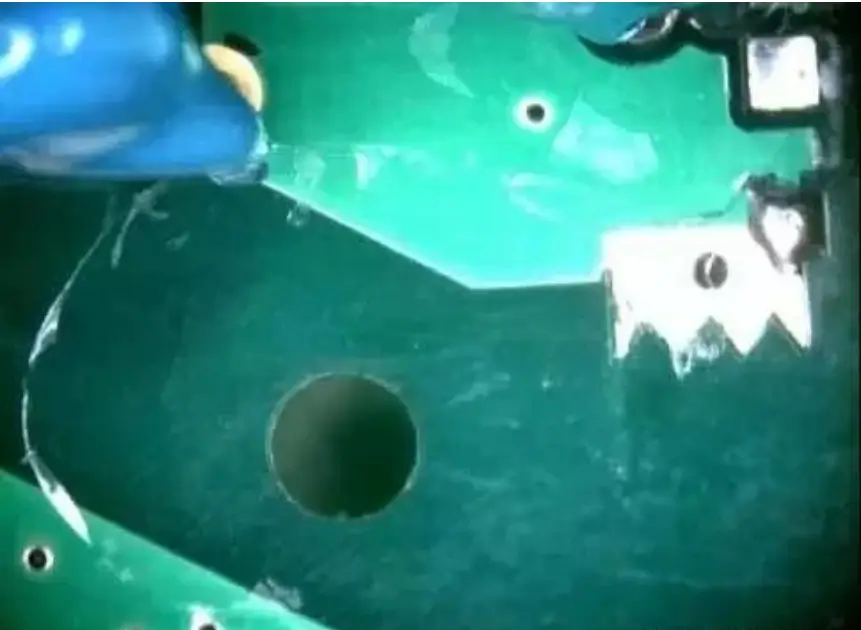
Conformal coating is widely used in electronics manufacturing to protect printed circuit boards (PCBs) against moisture, dust, chemicals, corrosion, and other environmental factors.
However, coating defects remain a common challenge in production. One of the most frustrating problems is conformal coating peeling, where the protective film separates from the PCB surface, develops bubbles, or gradually detaches from certain areas.
When this happens, manufacturers often investigate coating materials, spray parameters, curing temperatures, or application equipment.
But there is another factor that is frequently overlooked: the cleanliness of the PCB surface before conformal coating.
Even when the coating material and application process are correctly selected, residual flux, oils, dust, moisture, and other contaminants can interfere with adhesion.
In many cases, the problem starts before the coating process even begins.
1. Why Does Conformal Coating Peel Off?
Conformal coating adhesion depends on the interaction between the coating material and the PCB surface.
For a coating to form a reliable protective layer, it must properly wet and adhere to the substrate. If the surface contains contaminants or incompatible materials, the coating may not establish sufficient adhesion.
Several factors can contribute to peeling and delamination.
1.1 Flux Residues Left After Soldering
Flux is essential during soldering, but its residues can become a source of contamination if they are not properly managed.
Depending on the flux formulation and soldering process, residues may contain:
- Organic acids and activators
- Rosin or resin components
- Decomposition products from soldering
- Other non-volatile organic compounds
These residues can remain around solder joints, under components, and in narrow gaps.
When conformal coating is applied over contaminated surfaces, certain residues may interfere with surface wetting and adhesion.
Some flux residues can also absorb moisture or interact with the coating material, potentially contributing to corrosion, electrical leakage, or coating defects.
The risk depends on the flux chemistry, coating chemistry, and environmental conditions.
Important: No-clean flux does not automatically mean that the PCB is ready for conformal coating. Its compatibility with the selected coating system should be evaluated under actual production conditions.
1.2 Oils, Fingerprints, and Other Surface Contaminants
PCB surfaces can become contaminated during handling, assembly, storage, and transportation.
Common sources include:
- Fingerprints and skin oils
- Lubricants from production equipment
- Dust and airborne particles
- Residues from handling fixtures
- Silicone-based contaminants
These substances can create localized areas with poor surface wettability.
As a result, the coating may spread unevenly or fail to bond properly to the underlying surface.
Even a relatively small contaminated area can lead to visible coating defects.
1.3 Moisture Trapped on the PCB Surface
Moisture is another factor that should not be ignored.
If a PCB is not sufficiently dried after cleaning, or if moisture remains trapped beneath components, connectors, or other structures, it may interfere with the coating process.
Depending on the coating chemistry and curing mechanism, trapped moisture can contribute to:
- Poor adhesion
- Bubble formation
- Blistering
- Incomplete curing
- Long-term reliability problems
This is why drying is just as important as cleaning.
A clean PCB is not necessarily a dry PCB.
1.4 Incorrect Coating Application and Curing Conditions
Surface contamination is not the only possible cause of coating failure.
Other contributing factors include:
- Incorrect coating viscosity
- Excessive or insufficient coating thickness
- Inappropriate spray pressure or application distance
- Incorrect curing temperature or time
- Incompatible coating and substrate materials
- Poor process control
Therefore, coating peeling should be investigated as a process-related issue rather than automatically attributed to one single cause.
2. The PCB Cleaning Step That Should Not Be Skipped
Before applying conformal coating, manufacturers should evaluate whether the PCB surface is sufficiently clean for the selected coating system.
This is particularly important for assemblies with fine-pitch components, dense layouts, BGA packages, and complex geometries.
Proper PCBA cleaning helps remove contaminants that may affect coating adhesion and long-term reliability.
2.1 Remove Flux Residues Before Coating
A suitable cleaning process can remove soldering residues from PCB surfaces and areas around electronic components.
Depending on the application, manufacturers may use:
- Aqueous spray cleaning
- Batch spray cleaning
- Ultrasonic cleaning, where component compatibility permits
- Specialized cleaning agents for specific flux formulations
The cleaning chemistry and process parameters should be selected according to the flux type, component materials, assembly design, and coating requirements.
2.2 Remove Ionic and Organic Contamination
Not all contamination is visible.
A PCB may look clean while still containing ionic residues or thin organic films.
Ionic contamination can be particularly problematic because certain residues may attract moisture and contribute to electrochemical migration or corrosion under operating conditions.
Organic contamination, meanwhile, can affect surface wettability and coating adhesion.
A suitable cleaning and verification process helps control these risks.
Depending on the production requirements, basic cleanliness evaluation include:
- Visual inspection
- Ionic contamination testing
- Surface-specific testing where necessary
No single test provides a complete picture of every contamination risk. Testing methods should match the type of residue and the product’s reliability requirements.
2.3 Ensure Complete Drying Before Coating
After washing and rinsing, PCBs must be adequately dried before entering the conformal coating process.
Residual water can interfere with coating application and curing, particularly in areas with limited airflow.
A controlled drying process should consider:
- Drying temperature
- Airflow and air pressure
- Drying duration
- PCB geometry
- Moisture trapped beneath components
- Compatibility with temperature-sensitive components
The required drying conditions should be established through process validation rather than relying on visual appearance alone.
3. How to Establish a Reliable Cleaning Process Before Conformal Coating
A reliable pre-coating cleaning process generally includes several stages.
Step 1: Evaluate the PCB Assembly and Contamination
Identify the flux chemistry, soldering residues, component materials, and potential contamination sources.
Determine whether cleaning is necessary and what cleanliness level is required for the coating application.
Step 2: Select the Appropriate Cleaning Chemistry
Choose a cleaning agent that is compatible with the flux residues, PCB materials, components, and subsequent conformal coating.
The cleaning agent should provide effective residue removal without damaging sensitive components or materials.
Step 3: Optimize the Washing and Rinsing Process
Establish suitable washing temperature, spray pressure, cleaning time, and rinsing conditions.
For aqueous cleaning processes, DI water rinsing is commonly used to reduce residual cleaning chemistry and dissolved contaminants on the assembly.
The process should be validated using representative production boards.
Step 4: Ensure Complete Drying
Use controlled hot-air drying or another suitable drying method to remove residual moisture.
Pay particular attention to areas beneath components, connectors, and other locations where water may accumulate.
Step 5: Verify Cleanliness Before Coating
Do not rely solely on visual inspection.
Use appropriate cleanliness testing and coating adhesion evaluation to confirm that the cleaning process meets the requirements of the specific assembly and coating system.
This helps establish a repeatable process rather than relying on operator judgment.
4. What Cleaning Equipment Is Suitable for PCBA Before Conformal Coating?
The choice of cleaning equipment depends on PCB dimensions, production volume, component density, flux type, and cleanliness requirements.
Two common equipment configurations are batch cleaning machines and inline cleaning machines.
Batch PCBA Cleaning Machines
Batch cleaning equipment is suitable for manufacturers handling multiple PCB types, different production batches, and applications requiring flexible process parameters.
A batch cleaning machine can integrate:
- Chemical washing
- DI water rinsing
- Hot-air drying
- Programmable cleaning cycles
The process parameters can be adjusted according to the board design and contamination level.
Inline PCBA Cleaning Machines
For high-volume electronics manufacturing, inline cleaning machines offer continuous processing and integration with production lines.
They can provide controlled washing, rinsing, and drying stages, helping manufacturers maintain consistent cleaning conditions across production batches.
The appropriate equipment should be selected based on actual board requirements and validated cleaning performance.
5. How ACTSPRAY Supports PCBA Cleaning Before Conformal Coating
ACTSPRAY develops industrial cleaning equipment for PCBA assembly, semiconductor packaging, and precision electronics manufacturing.
For applications requiring PCB cleaning before conformal coating, ACTSPRAY provides different equipment configurations based on production requirements.
AC530 Batch PCBA Cleaning Machine
Suitable for batch cleaning applications where manufacturers need flexible washing, rinsing, and drying processes.
AC610 Vertical Spray Batch PCBA Cleaning Machine
Designed for cleaning electronic assemblies such as BGA, QFN, and SiP modules, with integrated washing, DI water rinsing, and hot-air drying.
FC760 Inline Deflux Cleaning Machine
Designed for high-volume inline deflux cleaning applications involving semiconductor packages and PCBA assemblies.
The final equipment configuration and cleaning parameters should be determined through sample testing to verify residue removal, material compatibility, and post-cleaning requirements.
Explore our PCBA Cleaning Equipment to learn more about industrial cleaning solutions for electronics manufacturing.
6. Final Thoughts: Coating Quality Starts Before Coating
When conformal coating peels off, the immediate reaction is often to check the coating material, spray process, or curing conditions.
However, the condition of the PCB surface before coating deserves equal attention.
Flux residues, oils, moisture, and other contaminants can interfere with coating adhesion and contribute to long-term reliability problems.
A properly validated cleaning, rinsing, and drying process helps establish a more reliable surface condition before conformal coating is applied.
The key takeaway is simple: Do not wait until the coating fails to investigate PCB cleanliness. A reliable coating process starts with a properly prepared surface.
Frequently Asked Questions (FAQ)
Q1: Does every PCB need to be cleaned before conformal coating?
Not necessarily. The need for cleaning depends on the flux chemistry, assembly process, coating material, and product reliability requirements. However, cleanliness and coating compatibility should always be evaluated before production.
Q2: Can no-clean flux cause conformal coating adhesion problems?
Yes, it can under certain conditions. No-clean flux residues are not automatically compatible with every conformal coating material. Compatibility testing and process validation are recommended.
Q3: What happens if flux residue remains under conformal coating?
Depending on the residue chemistry and environmental conditions, remaining flux may contribute to poor adhesion, moisture-related corrosion, electrical leakage, or other reliability issues.
Q4: Is DI water rinsing necessary after PCBA cleaning?
For aqueous cleaning processes, DI water rinsing is commonly used to remove residual cleaning agents and dissolved contaminants. The required rinsing process depends on the cleaning chemistry and assembly requirements.
Q5: How can manufacturers verify PCB cleanliness before conformal coating?
Methods may include visual inspection, ionic contamination testing, and application-specific coating adhesion tests. The appropriate method depends on the contaminants and required reliability level.