As semiconductor packaging becomes more complex, cleaning after soldering is becoming increasingly important. SiP, FCBGA, FCCSP and other advanced packages can contain flux residues in narrow gaps and around solder joints, making post-solder cleaning a critical process.
At the same time, conventional aqueous cleaning can generate significant amounts of rinse wastewater.
This has led manufacturers to look for zero-wastewater cleaning systems that can maintain cleaning performance while reducing water consumption and wastewater discharge.
What Is Zero-Wastewater Cleaning?
A zero-wastewater cleaning system is designed to minimize or eliminate conventional rinse-water discharge by recovering and reusing process liquids inside the machine.
Instead of continuously supplying fresh DI water and sending contaminated rinse water to a wastewater treatment system, the rinsing liquid is circulated through a controlled process.
A typical closed-loop process can be:
Rinsing → Liquid Recovery → Evaporation → Condensation → Recovery → Reuse
This method employs a process of water-based liquid cleaning and rinsing; the rinse liquid is recycled via distillation, and the flux is discharged after distillation, thereby achieving a clean, closed-loop rinsing system that requires no deionized (DI) water and generates no rinse wastewater.
Why Is This Important for manufacturers?
Facilities often have strict requirements for:
- Water consumption
- Chemical management
- Wastewater treatment
- Factory space
- Production stability
- Environmental control
For manufacturers running continuous cleaning processes, wastewater treatment can become an additional production consideration.
A wastewater-free cleaning system integrates liquid recovery directly into the cleaning equipment, reducing dependence on conventional rinse-water discharge.
How Does GC860 Recover Rinsing Liquid?
The ACTSPRAY GC860 uses a closed-loop rinsing process combined with evaporation and condensation recovery.
During operation, liquid generated in the rinsing sections is collected and processed internally.
A U-shaped condensation recovery system is installed above the rinsing sections. Vapors generated during operation are condensed, allowing recovered liquid to return to the process.
This creates a more controlled fluid-management system compared with conventional once-through rinsing.
What Can GC860 Clean?
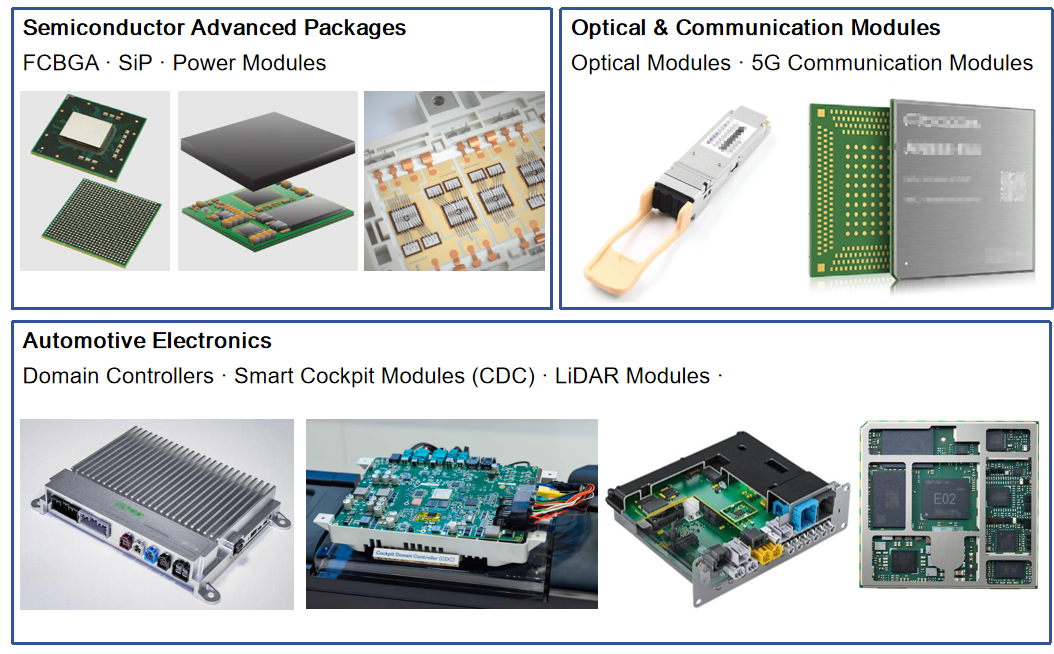
GC860 is designed primarily for SIP module cleaning after soldering and assembly.
Typical applications include:
Semiconductor Advanced Packages
- FCBGA
- SiP
- Power Modules
Optical & Communication Modules
- Optical Modules
- 5G Communication Modules
Automotive Electronics
- LiDAR Modules
- Smart Cockpit Modules (CDC)
- Domain Controllers
The machine combines chemical washing, chemical isolation, multi-stage rinsing, air drying and hot-air drying in one inline process.
Zero Wastewater Does Not Mean No Cleaning Liquid
An important distinction is that “zero wastewater” does not mean that the process requires no liquid.
The cleaning process still uses cleaning and rinsing liquids. The difference is that the system is designed to recover and reuse process liquid instead of continuously discharging rinse water.
The actual liquid consumption and recovery rate depend on factors such as:
- Product contamination
- Cleaning chemistry
- Production volume
- Operating temperature
- Process parameters
- Product size and loading
Therefore, the cleaning process should be evaluated using actual production conditions.
GC860 Closed-Loop Cleaning Process
The GC860 process can be configured as:
Loading → Pre-Washing → Washing 1→ Washing 2 → Chemical Isolation → Pre-Rinse (Distillation) → Rinsing 1 → Rinsing 2 → Rinsing 3→ Air Drying→ Hot Air Drying → Unloading
Conclusion
Zero-wastewater cleaning is becoming an alternative approach for semiconductor and electronics manufacturers looking to reduce water consumption and conventional wastewater discharge.
For SIP and other advanced electronic packages, the goal is not simply to reduce wastewater. The cleaning system must also provide stable flux removal and repeatable production performance.